
Scaling Personal Clienteling at lululemon
I led UX design for lululemon’s Clienteling platform, helping Personal Shoppers manage hundreds of guest relationships while keeping every interaction personal.
My role
Senior UX Designer
Scope
Guest management · Messaging · Tasks · Lookbooks · AI-assisted outreach · Permissions · Responsive design
The challenge
Personal shopping depends on knowing the guest: their history, preferences, conversations, and what should happen next.
As each Personal Shopper’s guest book grew, that context became harder to manage. The challenge was to scale the operational side of clienteling without making the experience feel transactional.
I focused the product around three questions:
Who is this guest?
What has happened?
What should I do next?
Designing the relationship workspace
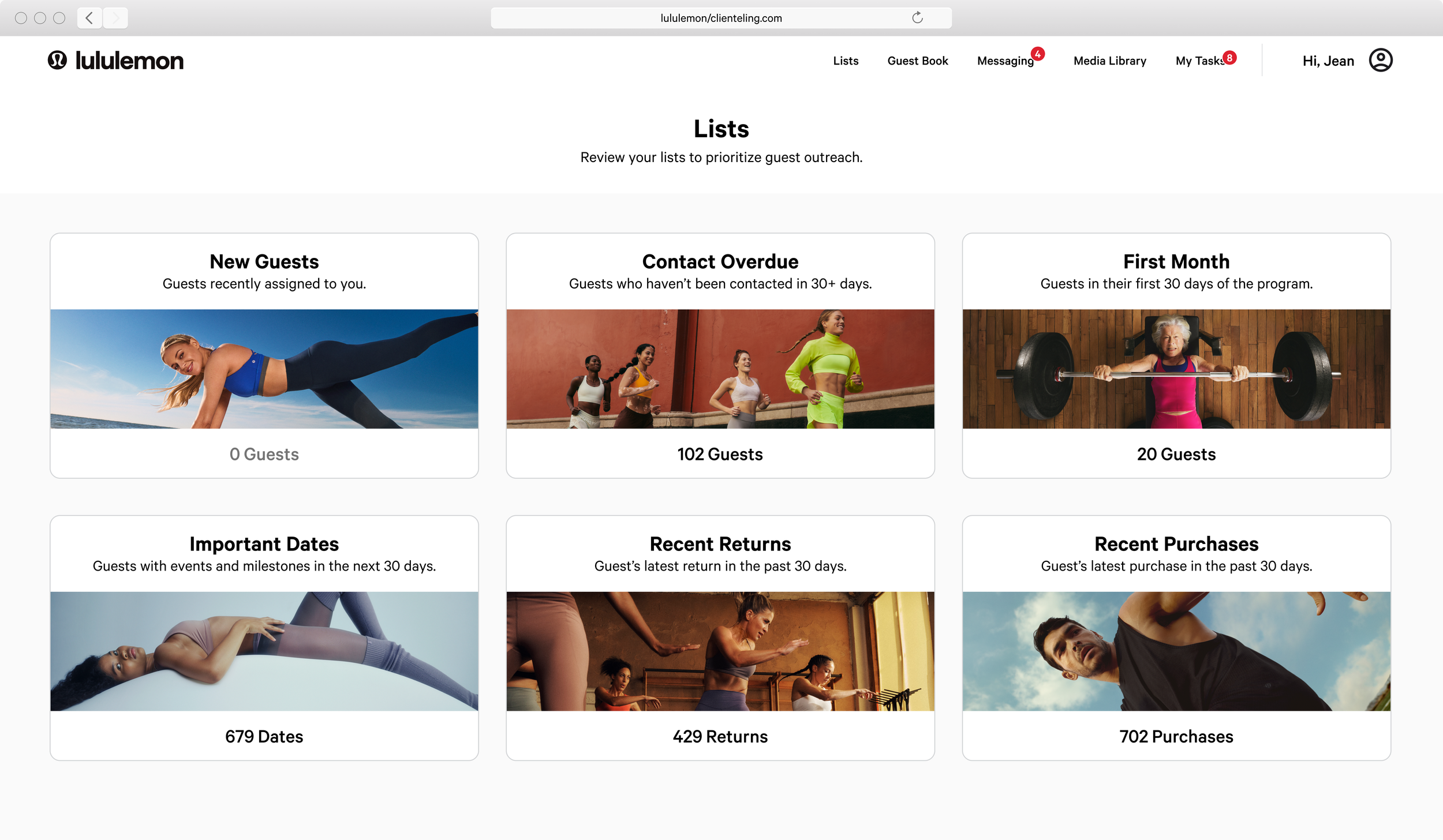
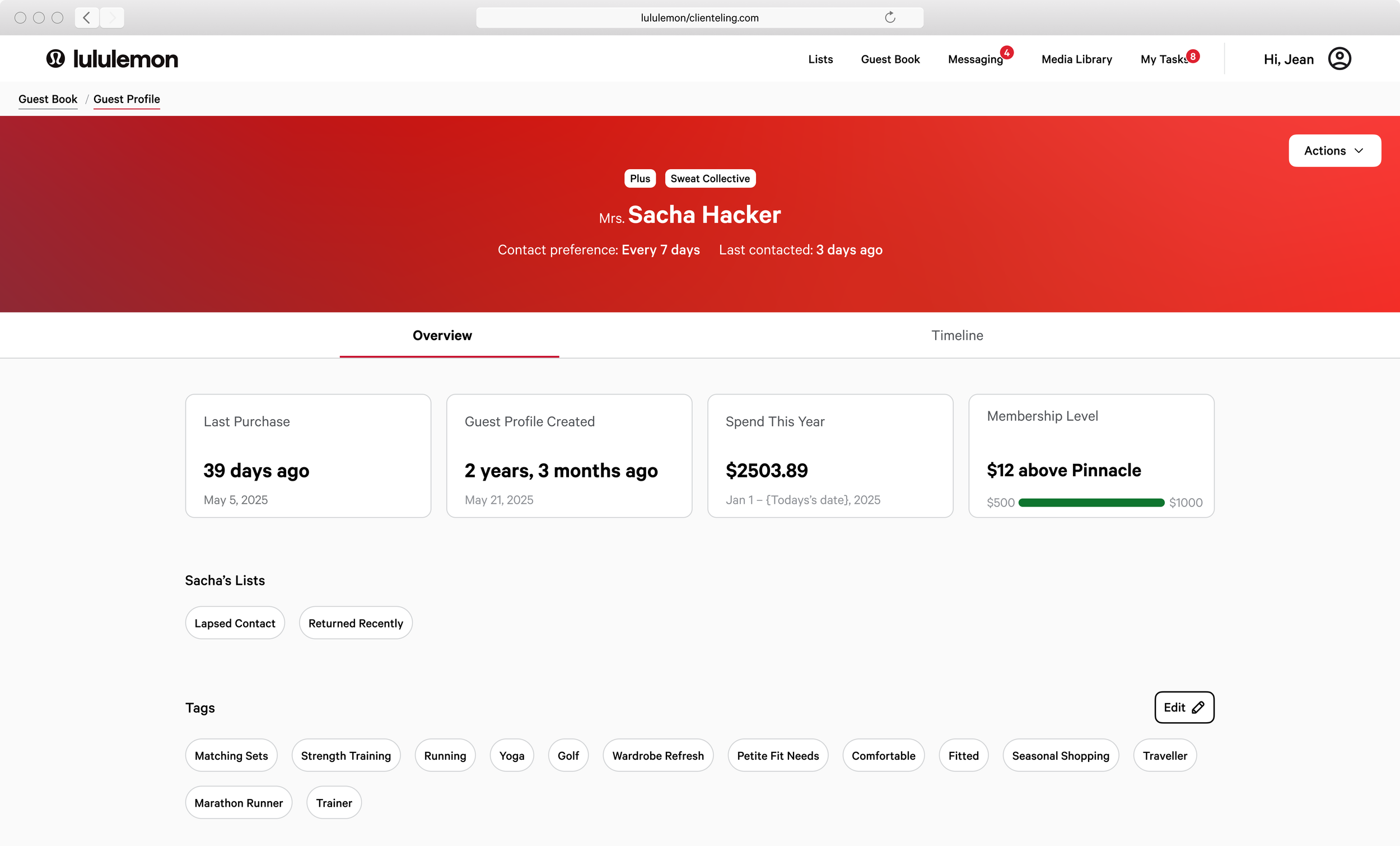
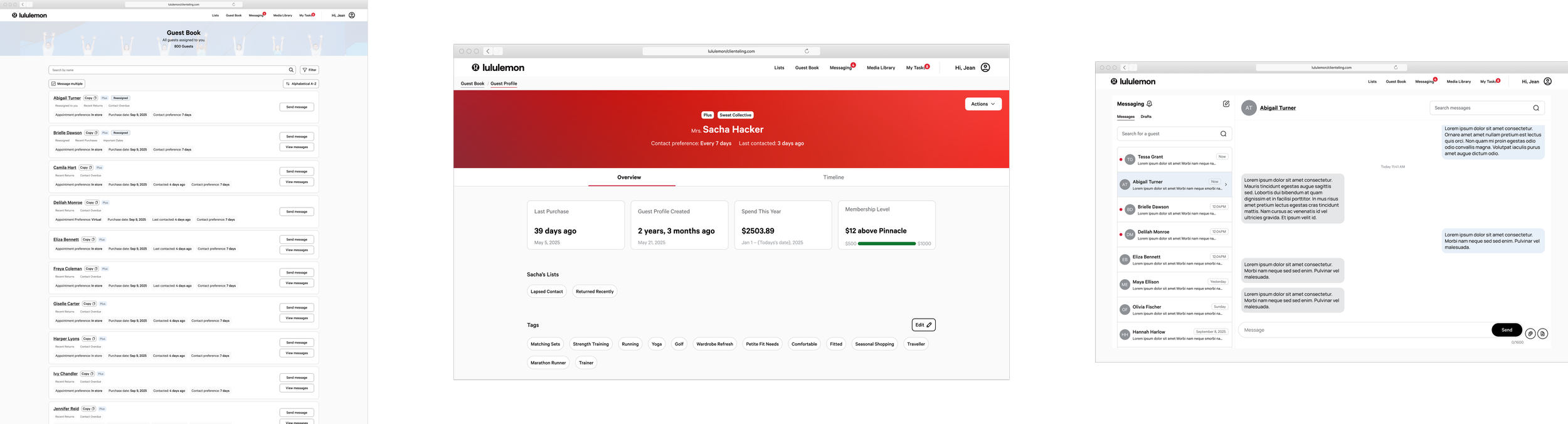
I evolved the Guest Book and guest experience into a central workspace for managing relationships—bringing guest context, conversations, recommendations, and follow-ups together.
The design had to work beyond the primary flow. I defined information hierarchy, search and filtering, assignment states, permissions, responsive behavior, and edge cases across different operational roles.
Design principle: Surface the right context at the moment it becomes actionable.
Turning follow-up into a system
Following up was essential to the Personal Shopper workflow, but difficult to manage reliably across hundreds of guests.
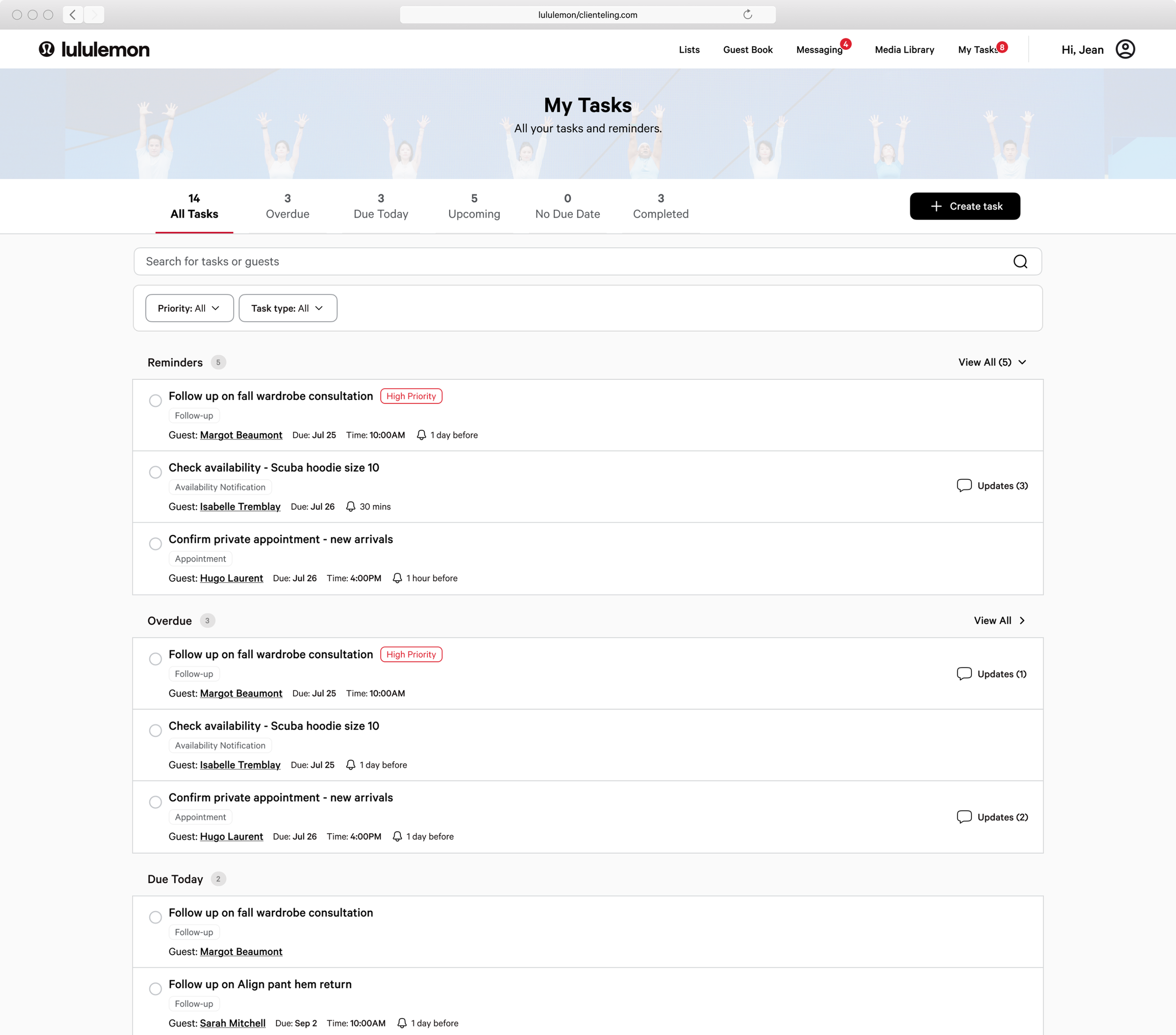
I designed a task system around urgency rather than rigid scheduling, separating Today, Upcoming, Overdue, and undated To Dos.
A key decision was allowing tasks to exist without a due date. Personal Shoppers could capture intent immediately without inventing an arbitrary deadline, then prioritize it when it became time-sensitive.
Tasks also surfaced within the guest experience, keeping follow-up connected to the relationship rather than isolated in a separate productivity tool.
Bringing recommendations into the workflow
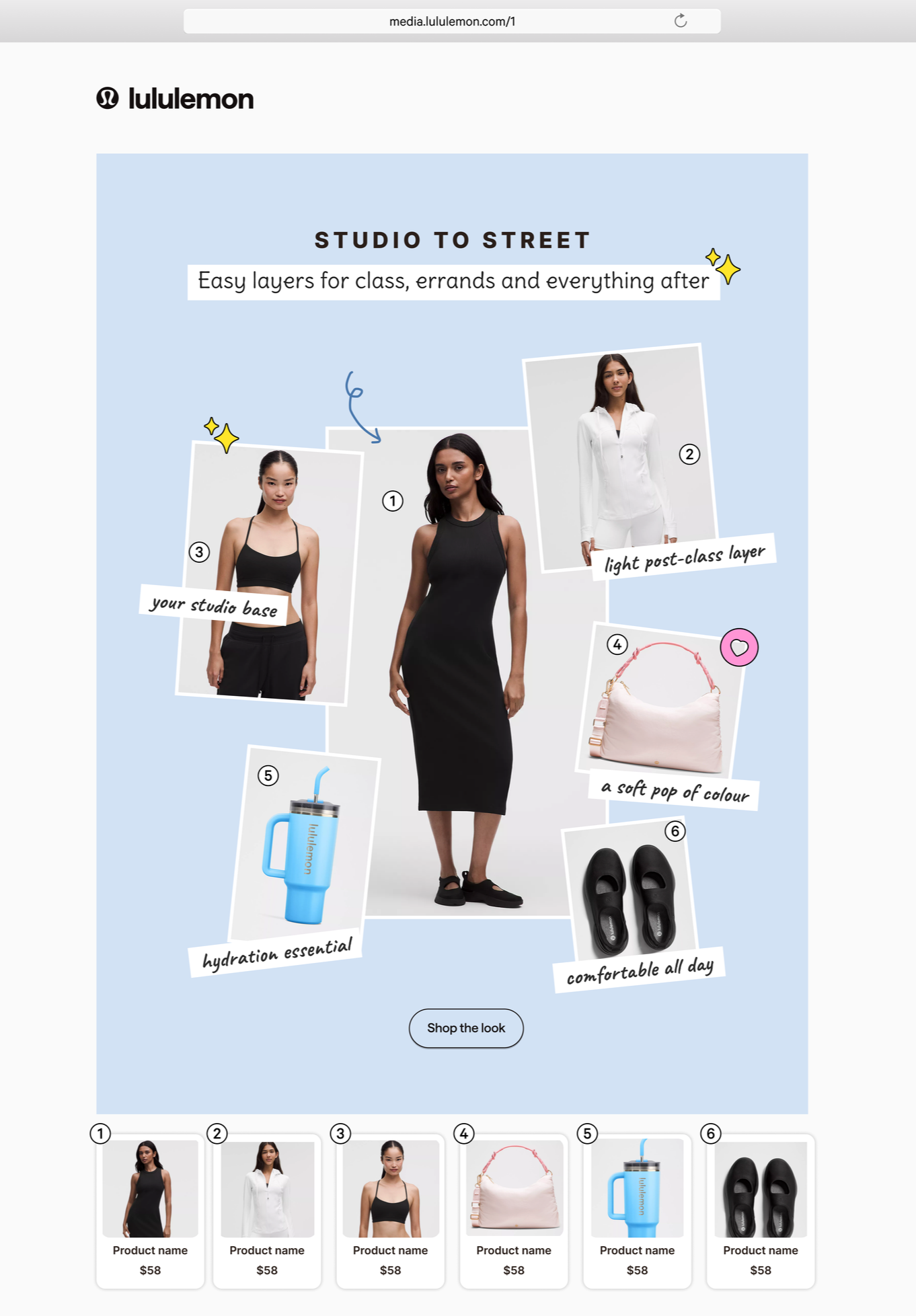
Personal Shoppers were creating curated recommendations outside Clienteling. I brought that workflow into the platform through reusable media and shoppable Lookbooks.
I designed the experience from creation through consumption: selecting media, linking products, organizing recommendations, sharing with a guest, and enabling direct shopping actions.
This turned a fragmented workflow into a connected journey:
Understand → Curate → Share → Shop → Follow up
Exploring AI without removing judgment
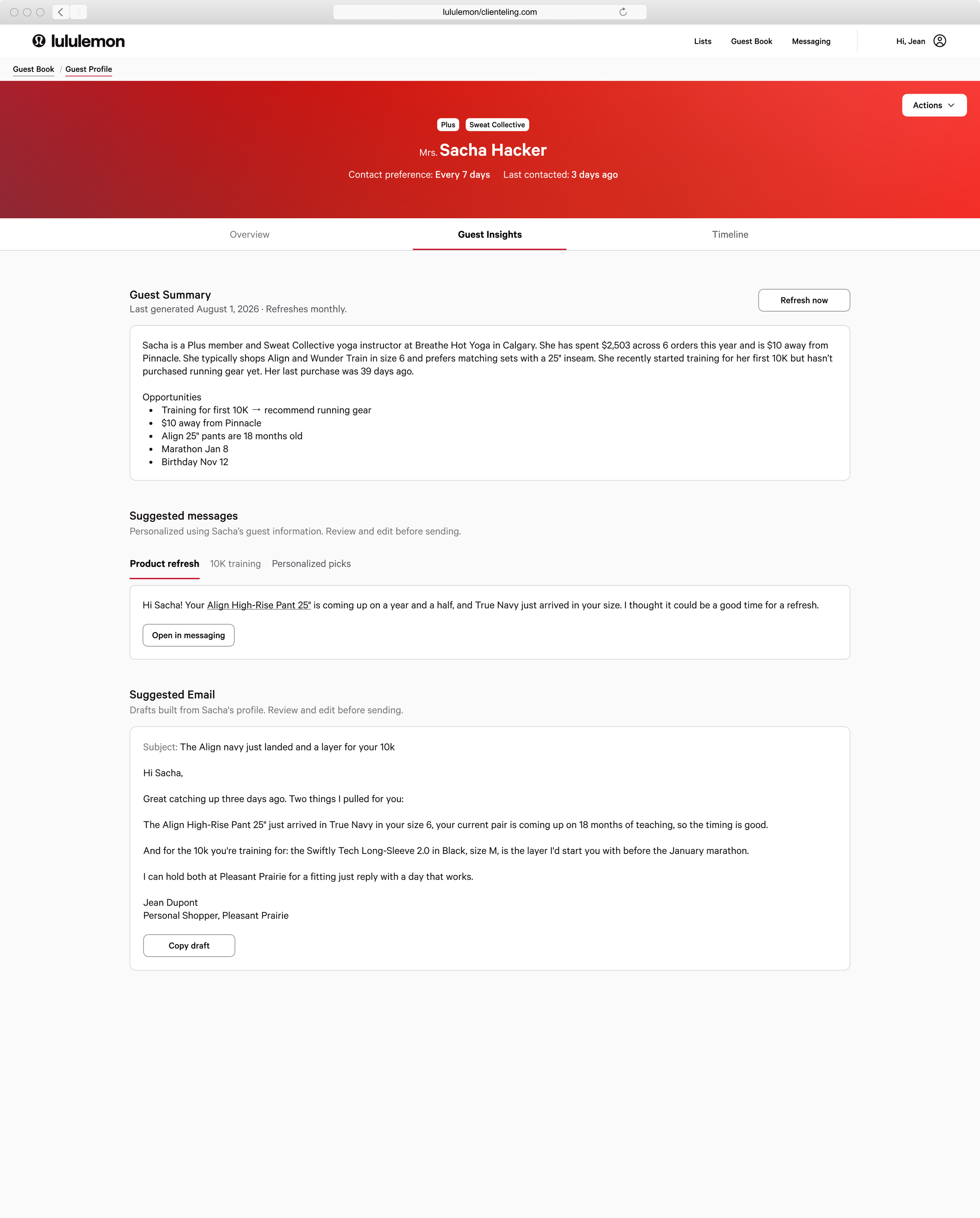
I explored AI-assisted outreach as a way to reduce preparation time while keeping the Personal Shopper in control.
Instead of generating a single answer, the experience presents multiple recommendations with context, allowing the Personal Shopper to choose, adapt, and send.
Principle: Use AI to accelerate judgment, not replace it.
How I worked
I owned design across interconnected workflows while partnering closely with Product, Engineering, Operations, and Personal Shoppers.
I used direct feedback from Personal Shoppers to challenge assumptions and refine mental models around guest context, task organization, reminders, and action hierarchy.
I also defined the states that make the system viable in production: permissions, errors, empty states, assignment logic, responsive behavior, and edge cases.
Outcome
The work evolved Clienteling from a collection of workflows toward a more connected system for managing the guest relationship.
Guest context → Conversation → Recommendation → Follow-up
The product carries more of the operational complexity, so Personal Shoppers can spend less effort managing the system and more attention on the guest.